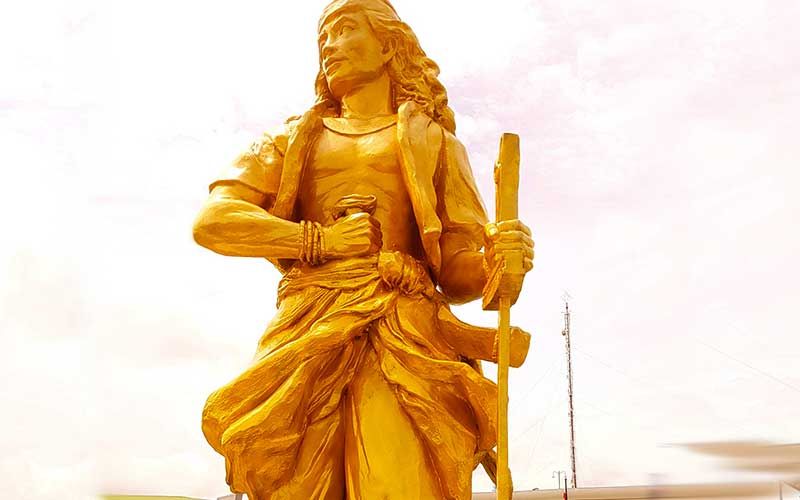
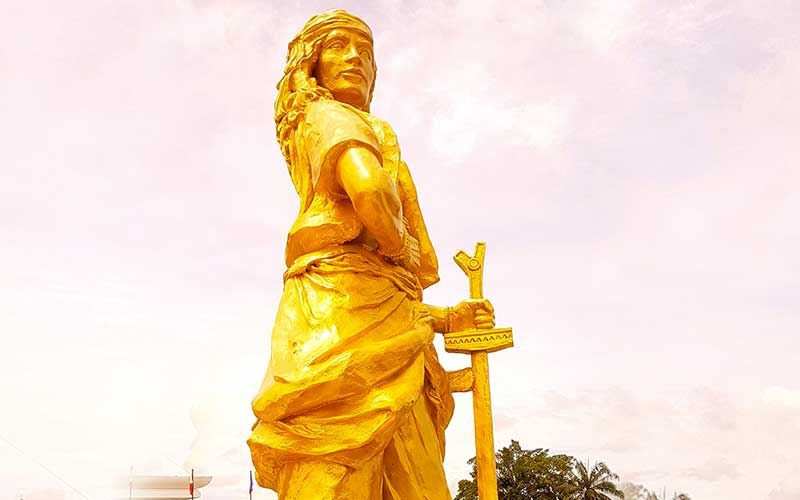
Sultan Kudarat lies along the western coast of Mindanao, facing the Moro Gulf and backing against the Cotabato basin and the mountain ranges that separate it from the rest of SOCCSKSARGEN. It is named for a 17th-century Maguindanao sultan whose resistance to Spanish conquest became one of the foundational stories of Bangsamoro identity.
IsulanCapital
5,765 km²Area
19Municipalities
MindanaoIsland Group
The province is one of the most ethnically and religiously diverse in the Philippines: Maguindanao and Teduray communities in the western lowlands and coastal areas, Ilocano and Cebuano settler communities in the agricultural interior, and the highland indigenous Teduray maintaining ancestral territories in the forest margins of the Daguma and Timuay ranges.
★
Named for a SultanThe province is named for Sultan Kudarat — Datu Mampac, Rajah of Maguindanao — who led resistance against Spanish colonial forces in the first half of the 17th century. His campaigns across the Mindanao coast, including alliance with the Dutch against Spain, made him the most formidable indigenous opponent the Spanish faced in the southern Philippines.
The Sultan and the Spanish
The Maguindanao Sultanate — the political entity that governed much of western Mindanao before Spanish arrival — reached its greatest power under Sultan Kudarat in the early 17th century. His military campaigns against Spanish forces in Zamboanga and across the Moro Gulf delayed effective Spanish control of western Mindanao by decades. The alliance he formed with Dutch colonial forces based in the Moluccas against their shared Spanish adversary was one of the more sophisticated geopolitical manoeuvres of pre-modern Philippine history.
1596–1671Sultan Kudarat — Maguindanao Resistance
Sultan Kudarat — also known as Cachil Corralat in Spanish records — ruled the Maguindanao Sultanate during its most expansive period. His campaigns against the Spanish, beginning in the 1630s and continuing until his death, prevented the colonisation of western Mindanao and established a tradition of armed resistance that would continue until the American period.
1966Province Established
Sultan Kudarat was carved from Cotabato province in 1966 — the same year as South Cotabato — as part of the reorganisation of the large Cotabato province into more manageable administrative units. Isulan, a settlement in the agricultural interior, was designated as the capital.
2003Peace Process Developments
The decades of armed conflict between the Philippine government and Moro Islamic Liberation Front forces — which affected Sultan Kudarat's western municipalities — began moving toward negotiated resolution in the early 2000s. The province's position at the edge of the BARMM administrative area means that the peace process continues to shape local governance.
Sultan Kudarat's cultural identity is layered. The Maguindanao communities of the coast and western lowlands maintain Islamic practice, traditional governance structures, and the musical traditions — the kulintang ensemble, the okir decorative arts — of the Bangsamoro world. The Teduray of the highland interior maintain animist and Christian-inflected traditions distinct from both the Maguindanao and the Christian settler communities.
Teduray People
The Teduray are one of the non-Islamised indigenous groups of the Mindanao interior — communities that maintained their own governance and spiritual practices through both Spanish and American colonialism, and that have faced persistent pressure on their ancestral domain from both settler encroachment and the Bangsamoro political process. Teduray weaving and brasswork are among the distinctive arts of the province.
Kulintang Music
The kulintang — an ensemble of gong instruments played in combination — is the central musical form of the Maguindanao cultural tradition in Sultan Kudarat and across western Mindanao. The kulintang ensemble typically includes five to nine gongs arranged in a row, played with padded mallets, accompanied by larger hanging gongs and a drum. The ensemble performs at weddings, celebrations, and royal occasions.
★
Inaul WeavingThe Maguindanao inaul textile — woven on a backstrap loom from silk or cotton thread in geometric patterns of red, gold, and black — is one of the most technically demanding weaving traditions in the Philippines. Inaul is used for ceremonial dress and as a marker of social status. Weavers in the municipalities of Sultan Kudarat and across the Maguindanao corridor maintain the tradition.
Sultan Kudarat's food reflects its ethnic diversity. The Maguindanao communities prepare rice-based dishes with coconut milk and local spices — the palapa condiment of roasted coconut, ginger, and chilli that defines Bangsamoro cooking appears in various forms across the western municipalities. The Christian settler communities cook the pork and chicken dishes of the Visayas and Ilocos, absent from the Muslim-majority western towns.
Pyanggang
A Maguindanao preparation of chicken cooked in charred coconut and palapa spice paste. The chicken is blackened with the carbon of burned coconut meat — not charred itself, but stained with the dark colour of the condiment. The flavour is rich, smoky, and deeply aromatic. It is one of the most distinctive dishes of western Mindanao.
Piyaren a Tuna (Maguindanao Tuna Curry)
Fresh tuna cooked in coconut milk with palapa, turmeric, and local herbs. The tuna used in Sultan Kudarat comes from the Moro Gulf — the same waters that supply the General Santos tuna port. Cooked briefly to retain texture, with the coconut milk reduced to a thick, spiced sauce.
✦
Finding Maguindanao Food in IsulanThe capital Isulan has a commercial centre where both halal and non-halal food is available. Halal restaurants and carinderias serving Maguindanao dishes cluster near the market. The palapa condiment — a preparation of roasted coconut with ginger, sakurab onion, and chilli — is sold at the market and is worth bringing home.
Sultan Kudarat is linguistically complex. Maguindanaon — a major Austronesian language of the Philippine family — is spoken by the indigenous Maguindanao communities of the west. Teduray, an entirely separate language, is spoken by the highland indigenous communities. Cebuano and Ilocano are the dominant languages of the settler municipalities. Filipino and English serve as the languages of government and education across all communities.
Maguindanaon Language
Maguindanaon is spoken by an estimated 1.1 million people across Sultan Kudarat, Maguindanao del Norte, Maguindanao del Sur, and adjacent provinces. It is the language of the Maguindanao Sultanate and carries an extensive oral literature — royal genealogies, the darangen narrative tradition, and the ceremonial language of the kulintang ensemble that is distinct from everyday speech.
★
Teduray — A Language ApartTeduray is classified as a separate branch of the Philippine language family, not closely related to Maguindanaon or Cebuano. It is spoken by an estimated 80,000 people in the highland interior of Sultan Kudarat and North Cotabato. The Teduray have their own oral tradition and spiritual vocabulary that encodes knowledge of the highland forest environment.
Sultan Kudarat is reached via General Santos City or Koronadal in South Cotabato, and from Cotabato City to the north. Isulan is about two hours from General Santos by road — through the agricultural plains of the SOCCSKSARGEN interior. Travel to the western coastal municipalities requires current security advisories, as parts of the province border areas with a history of armed conflict.
2 hrsFrom General Santos
2.5 hrsFrom Cotabato City
IsulanCapital
Check travel advisoriesNote
Lake Buluan
A large freshwater lake in the northern part of Sultan Kudarat, shared with the neighbouring province of Maguindanao del Sur. Lake Buluan is a productive fishing ground and provides a living for dozens of lakeshore communities. The lake's shallow margins are important habitat for freshwater birds — the Philippine duck and various herons are recorded here.
Daguma Mountain Range
The highland spine running through the interior of Sultan Kudarat — forested, largely roadless, and the ancestral territory of the Teduray communities. The Daguma range forms the watershed between the Moro Gulf coast and the Cotabato basin. Access requires community permission from Teduray leaders.
✦
Travel SafetySultan Kudarat's western and northern municipalities have historically been affected by the Bangsamoro conflict. Current conditions vary. Check advisories from the Department of Tourism and local government before travelling beyond Isulan and the main arterial road. The eastern municipalities and the capital are generally accessible without restriction.