Map

Negros Occidental

Western Visayas
Visayas
Capital Bacolod City
Population 3,218,153
Area 7,926 km²
Municipalities 19
Cities 13
Island Group Visayas
Languages Hiligaynon, Cebuano
Kapitbahay — Neighboring Provinces

Negros Occidental occupies the western half of Negros Island in the Western Visayas. It is the sugar capital of the Philippines — the province that produces the majority of the country's sugarcane and refined sugar, and whose economy, social structure, and political history have been shaped by this single crop for nearly two centuries. Bacolod City, the regional center, is known as the City of Smiles and hosts the MassKara Festival — one of the most celebrated provincial festivals in the Philippines.

Bacolod CityCapital
7,926 km²Area
19Municipalities
13Cities
VisayasIsland Group
Western Visayas (VI)Region

The province is among the most economically developed in the Visayas. Bacolod City has a well-established middle class, a strong university sector, and a food culture that draws visitors from across the country. The hacienda system — vast sugar estates worked by tenant farmers and seasonal laborers — has defined the province's social geography since the 19th century, creating a distinct class divide that remains visible today.

Sugarcane Country

Negros Occidental produces approximately 60–70% of the Philippines' total sugar output. The province's flat coastal plain and fertile volcanic soil create near-ideal conditions for sugarcane cultivation. At peak production, the province had more miles of narrow-gauge railway connecting haciendas to sugar mills (centrals) than any comparable area in Southeast Asia.

Beyond sugar, the province has a significant fishing industry, a growing BPO sector in Bacolod, and a tourism economy built around food, heritage architecture, and the MassKara Festival each October.
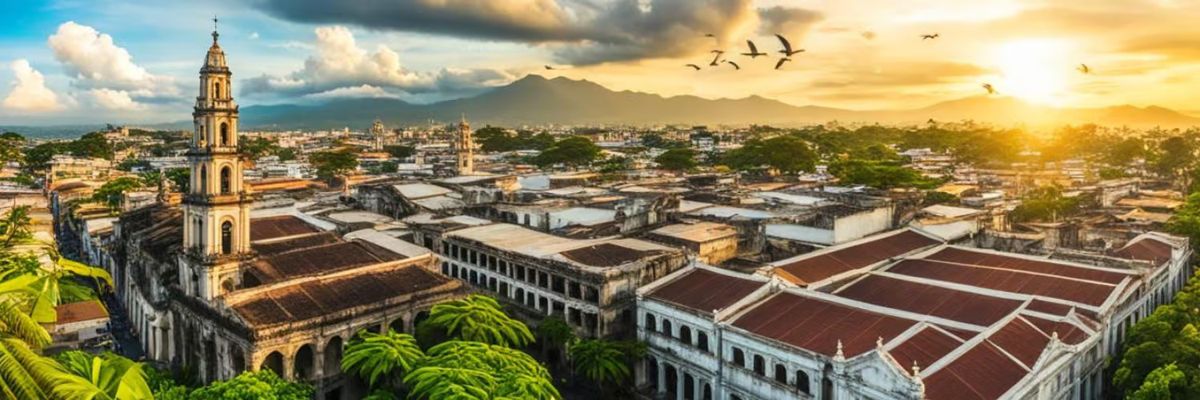
Negros Island was a forested, sparsely populated place when the Spanish arrived. It was initially settled by migrants from Cebu in the late 16th and early 17th centuries. The transformation of Negros Occidental into sugar country began in the mid-19th century, when the opening of Iloilo Port to international trade created demand for export crops and attracted British and Spanish capital to develop the island's agricultural potential.

1565

Spanish Contact with Negros

The Legazpi expedition passes through Negros waters. The island's name — from 'negro,' dark — reportedly refers to dark-skinned Ati peoples the Spanish encountered on the coast.

1850s

Sugar Economy Begins

The opening of Iloilo to international trade spurs development of Negros Occidental's sugarcane industry. British merchant Nicholas Loney introduces modern sugar milling technology and facilitates the purchase of equipment on credit, enabling rapid expansion of hacienda agriculture.

1898–1899

Negros Revolution

The sugar planter class of Negros Occidental drives out Spanish forces and establishes a short-lived Cantonal Republic of Negros before being absorbed by the Philippine Republic and then American colonial rule.

1980–1985

Sugar Crisis

A collapse in world sugar prices combined with the corrupt management of the Philippine sugar marketing monopoly (NASUTRA) creates an economic crisis in Negros Occidental. Mass unemployment among sugar workers leads to widespread hunger. The crisis becomes known internationally as the 'Negros Famine.'

October (Annual)

MassKara Festival Established

The MassKara Festival is created in 1980 — exactly at the height of the sugar crisis — as a deliberate assertion of resilience and community spirit. The festival of smiling masks becomes an annual October celebration and one of the Philippines' most famous provincial festivals.

The MassKara Festival is Negros Occidental's most recognizable cultural export. Held every fourth Sunday of October, it fills Bacolod City's streets with dancers in elaborate costumes topped by smiling festival masks — the 'MassKara' (from masa, meaning crowd or masses, and kara, meaning face). The festival began as a response to the 1980 sugar crisis: when the rest of the country was watching Negros suffer, the province declared a party.

The Hacienda System

The hacienda — the sugar plantation estate — remains a social reality in Negros Occidental. Large landholdings, often intact from the 19th century, define much of the province's landscape. The hacendero class (estate owners) is small, wealthy, and politically influential. The farmworkers (sacadas, seasonal harvest laborers, and tenant farmers) form the other end of the social scale. Land reform programs have had limited impact on the largest estates.

Ruins at Talisay

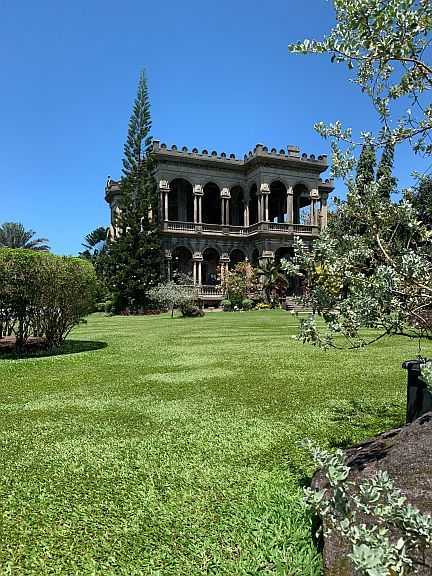
The Ruins in Talisay City is the burned-out shell of a grand early 20th-century mansion built by sugar baron Don Mariano Lacson for his wife Maria Braga. During World War II, the family burned the mansion to prevent Japanese forces from occupying it. The concrete walls remained and have become one of the most photographed heritage sites in the Philippines.

Bacolod's food culture reflects the wealth accumulated during the sugar boom. The city has a concentration of restaurants per capita among the highest in the Philippines outside Metro Manila. Chicken inasal — the Bacolod grilled chicken preparation — is the province's most famous food export, now found in restaurant chains throughout the country.

See the great festivals in Pista ng Pilipinas →

Bacolod's food reputation extends beyond the province. Chicken inasal has become a national dish, but it represents only a fraction of the Negrense culinary tradition. The province's sugar wealth historically meant that its cooking used sweeteners more liberally than most Philippine regional cuisines. Seafood from the Visayan Sea and freshwater fish from interior rivers add range to the table.

Chicken Inasal

Chicken marinated in a mixture of vinegar, calamansi, ginger, lemongrass, garlic, annatto (atsuete), and salt, then grilled over charcoal. The characteristic color comes from the annatto marinade. Served with rice stained orange by the chicken's drippings, with a dipping sauce of vinegar and chili. The original recipe from Manokan Country in Bacolod is considered the benchmark.

KBL (Kadyos, Baboy, Langka)

A sour stew of kadyos (pigeon peas), pork hock, and unripe jackfruit, sourced with batwan fruit — a Visayan souring agent with a distinctive tart flavor. This is the signature soul food of Negros Occidental, found in every Ilonggo home and carenderia throughout the province.

KBL (Kadyos, Baboy, Langka)

Negros Occidental / Ilonggo
20 minutesPrep
1.5 hoursCook
6Serves
Ingredients
  • 700g, cut into piecesPork hock or pork ribs
  • 1 cup, soaked overnightDried kadyos (pigeon peas)
  • 300g, cut into chunksUnripe jackfruit
  • 6 pieces fresh, or 3 tbsp tamarind pasteBatwan fruit (or tamarind as substitute)
  • 1 medium, slicedOnion
  • 4 cloves, crushedGarlic
  • 2 tbspFish sauce
  • 8 cupsWater
Method
  1. Boil pork in water with onion and garlic. Skim scum. Simmer 40 minutes.
  2. Add soaked kadyos and continue simmering for 30 minutes until peas begin to soften.
  3. Add jackfruit and batwan (or tamarind). Cook 20 minutes more until pork is very tender and peas are fully cooked.
  4. Season with fish sauce. Taste and adjust sourness — add more batwan or tamarind as needed.
  5. Serve hot with rice. The broth should be sour, savory, and slightly thick from the peas.
Cook's note

Batwan is the authentic souring agent for KBL and gives the dish a flavor distinct from tamarind. It is available fresh in Negros Occidental and can sometimes be found dried in specialty stores elsewhere. The dish improves overnight as the flavors integrate.

Hiligaynon (also called Ilonggo) is the primary language of Negros Occidental and the wider Western Visayas region. It is the language of Iloilo City — the historical trade and cultural center of the Visayas — and spread to Negros Occidental with the Cebuano and Ilonggo migration that developed the island's sugar economy.

Hiligaynon is spoken by approximately 9 million people, making it one of the major Philippine languages. Its literary tradition includes poetry, drama, and prose in both colonial-era and contemporary forms. The Hiligaynon word 'maayong aga' (good morning) and the social concept of 'pagkamabinuligon' (helpfulness) are reflective of the language's cultural values.

Ati Language

The Ati people — one of the Negrito groups of the Philippines, considered among the earliest inhabitants of Negros Island — speak Ati, a distinct language in the Philippine language family. Small Ati communities survive in the mountains of Negros Occidental and Panay, maintaining their language and traditional practices under significant economic and social pressure.

Filipino and English are used in Bacolod City's commercial and educational life. The city's BPO sector employs thousands of Hiligaynon speakers in English-language customer service roles, a pattern that has reinforced English proficiency across the educated population.

Bacolod City is well-connected with its own international airport and regular ferry services from Iloilo, Cebu, and Manila. The city is easy to navigate, compact enough for walking in the center, and has a well-developed accommodation and restaurant sector.

Bacolod-Silay AirportAirport
~1 hourFlight from Manila
~20 minutes by FastCraftFerry from Iloilo
October (4th Sunday and surrounding week)MassKara Festival

The Ruins, Talisay City

The burned concrete shell of the Lacson mansion, built in the Italian Renaissance style in the early 20th century by a sugar baron. The structure is most dramatic at sunset and at night when lit. It is the most photographed heritage site in Negros Occidental and a short drive from Bacolod City.

Manokan Country, Bacolod

An open-air food park in the city center dedicated entirely to chicken inasal. Multiple stalls compete for customers with variations on the Bacolod marinade style. The smoke from dozens of charcoal grills fills the area in the evening. This is the spiritual home of the dish.

Capitol Lagoon and Park

A public park and lagoon in the center of Bacolod surrounding the Negros Occidental Capitol Building. A popular afternoon and evening gathering spot for city residents. The Capitol building itself is a heritage structure from the American period.

Mambukal Mountain Resort

A resort in the municipality of Murcia, at the foot of Mount Kanlaon in the Negros mountains. The resort has hot spring pools, waterfalls, a butterfly sanctuary, and trekking trails. Used by Bacolod residents as a weekend mountain escape.

Draft — for verification

This nature section is a first draft prepared for editorial and factual review before publishing. Species facts, conservation status, and local sightings should be confirmed against current sources.

Negros Occidental has lost most of its lowland forest to sugar farming, which makes its remaining wildlife especially precious. Several species survive only in the last mountain forests of the island.

Visayan Warty Pig
Sus cebifrons
Critically Endangered
A wild pig found only in the Visayas, with wild tufts of hair on the males. It survives in a few forest patches on Negros. Breeding programs work to save it from extinction.
Visayan Spotted Deer
Rusa alfredi
Endangered
A small, shy deer with white spots, found only in the Visayas. Negros holds one of its last populations. Hunting and forest loss remain serious threats.
Negros Bleeding-heart
Gallicolumba keayi
Critically Endangered
A ground dove with a red chest mark, found only on Negros and Panay. It is one of the rarest birds in the country and needs dense forest floor.
Meet all 65 Philippine animals in Hayop ng Pilipinas →
← All stories
Kasaysayan · Bacolod

San Sebastian Cathedral

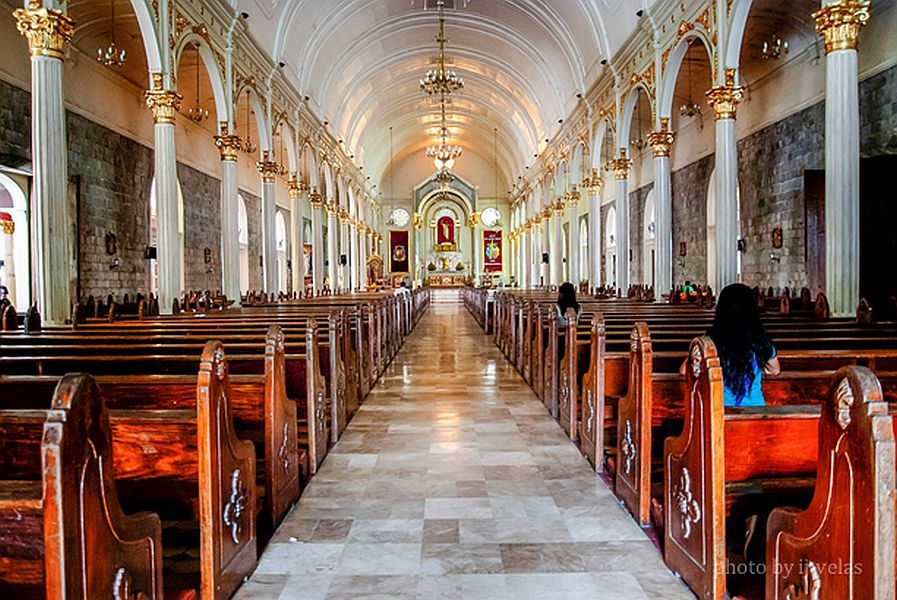
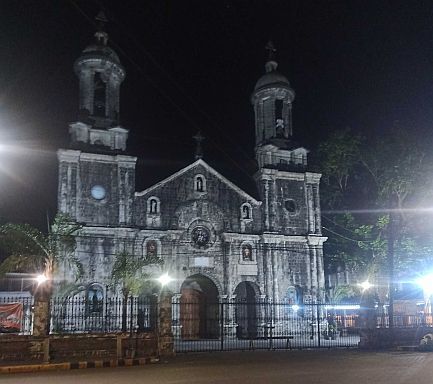
The San Sebastian Cathedral stands at the heart of Bacolod, Negros Occidental, named for the Christian martyr Saint Sebastian. It has been a center of faith since the late nineteenth century.

The parish dates to 1788, but the stone cathedral came later. Fr. Mauricio Ferrero designed the work and saw it through. The cornerstone was laid on 27 April 1876, and the church was consecrated on 19 January 1882, built of coral stone brought from Guimaras, with twin bell towers added in 1885.

When the Diocese of Bacolod was created in 1932, San Sebastian became its cathedral. By the entrance stand monuments to Fr. Fernando Cuenca, who founded many Negros towns, and to Fr. Ferrero, remembered as a father of Bacolod.

The feast of Saint Sebastian falls on 20 January, and the cathedral also marks Our Lady of the Most Holy Rosary each October, at the height of Bacolod's famous MassKara Festival.

Mga Larawan

← All stories
Kasaysayan · Talisay

The Ruins

The Ruins, in Talisay City near Bacolod, is one of the most beloved landmarks of Negros Occidental, often called the Taj Mahal of Negros.

It is the skeleton of a grand mansion built in the early 1900s by the sugar baron Don Mariano Ledesma Lacson, in memory of his wife, Maria Braga, of a Macau family, who died while carrying their eleventh child. He raised the house as a monument to her.

During the Second World War, Filipino and American forces burned the mansion to keep it from becoming a Japanese garrison. Its Italianate columns and fine details survived the fire, and the roofless shell still stands amid landscaped gardens, most beautiful at sunset when it glows against the darkening sky.

Mga Larawan