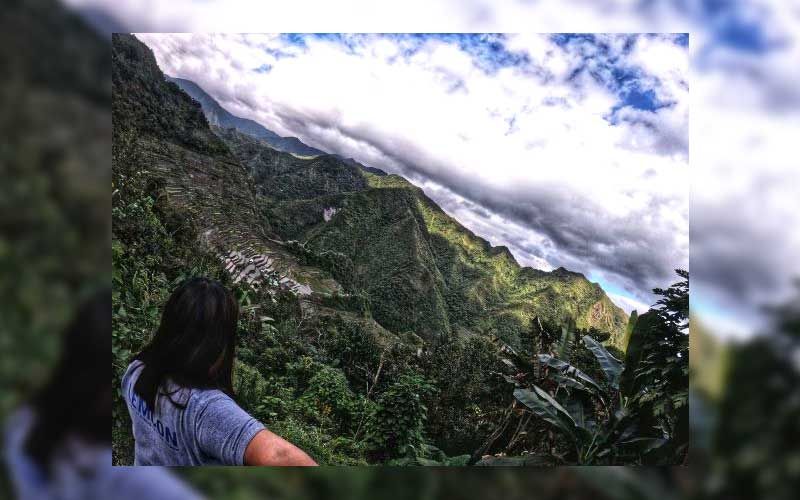
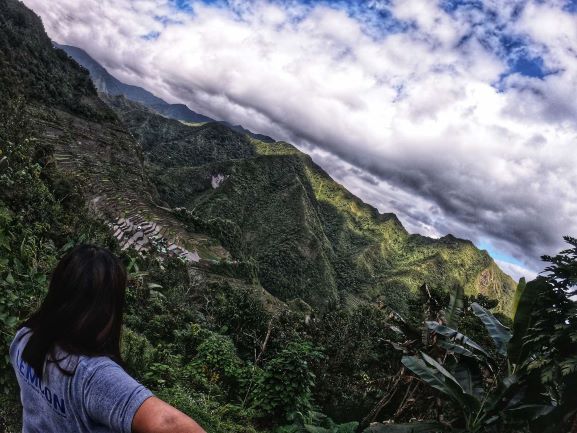
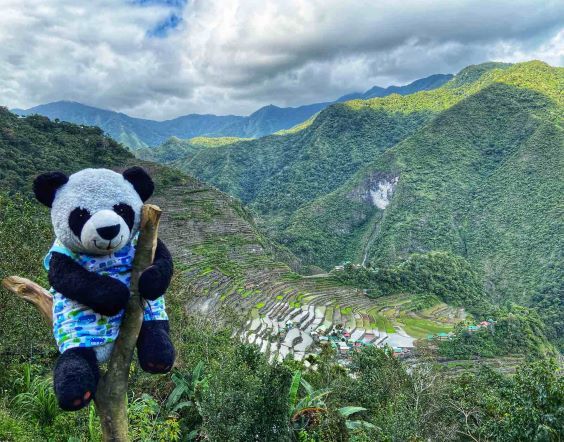
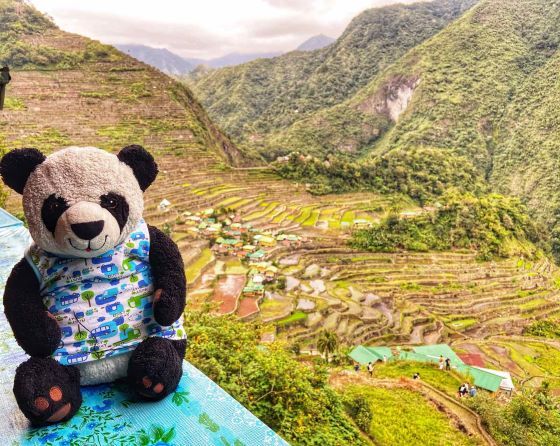
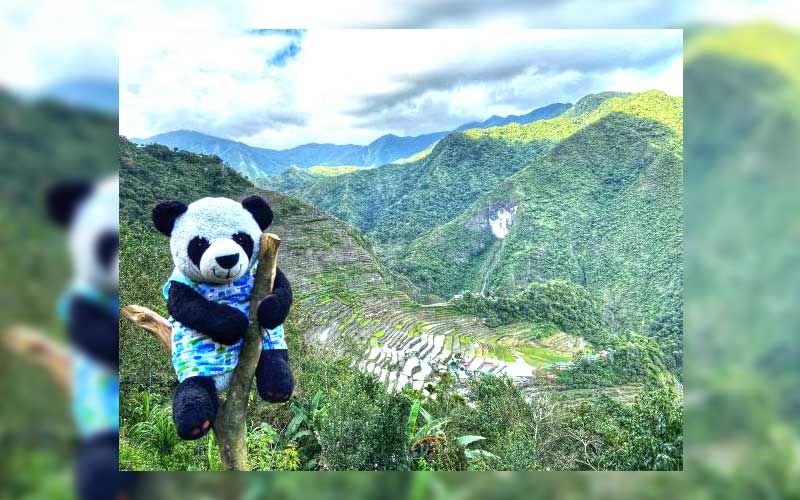
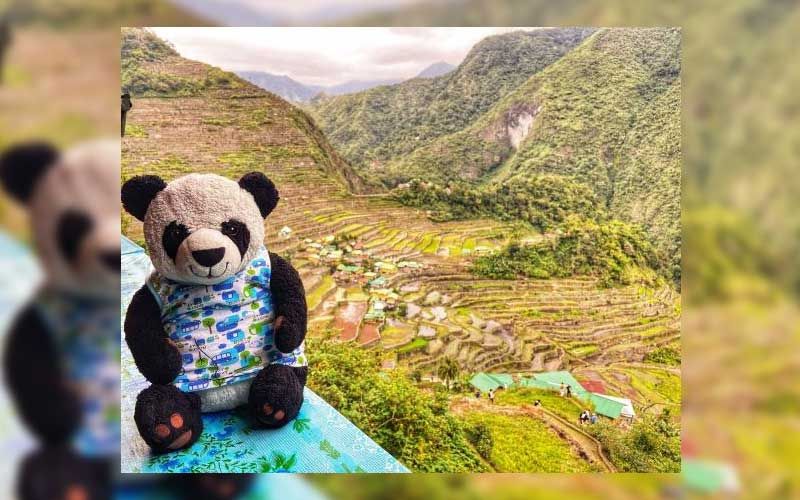
Ifugao sits in the central Cordillera mountains of northern Luzon, a province defined by its verticality. The landscape is a series of steep ridges and deep river valleys, and for two thousand years the Ifugao people have been carving and maintaining rice terraces into those ridges — a feat of engineering that the United Nations has called the Eighth Wonder of the World.
LagaweCapital
2,518 km²Area
11Municipalities
LuzonIsland Group
Lagawe is the provincial capital, a small town in a river valley at the base of the mountains. Most of what is significant about Ifugao — the terraces, the indigenous communities, the ritual life — lies above and beyond the capital, in the mountain municipalities of Banaue, Kiangan, Hungduan, and Mayoyao.
★
UNESCO World Heritage SiteThe Cordillera rice terraces — concentrated in Ifugao and spanning the clusters of Banaue, Batad, Bangaan, Hungduan, and Mayoyao — were inscribed as a UNESCO World Heritage Site in 1995. The designation recognized both the physical engineering achievement and the living cultural system that maintains it. The terraces remain a working agricultural system, not a museum exhibit.
Ifugao is the cultural heartland of the Ifugao people, whose social structure, cosmology, and law are among the most extensively documented indigenous systems in the Philippines. The province's isolation in the Cordillera mountains protected it from full Spanish colonial penetration, and the Ifugao maintained effective autonomy until well into the American period.
The Ifugao people have lived in these mountains for at least two thousand years, and the terraces they built during that time represent an unbroken tradition of community engineering and agricultural knowledge. The Spanish never successfully colonized the Cordillera interior — their expeditions into the mountains were repulsed, and the Ifugao remained outside colonial administration.
c. 2000 years agoConstruction of the Rice Terraces Begins
Archaeological and linguistic evidence suggests the Ifugao ancestors began constructing terraced rice paddies in the Cordillera mountains roughly two thousand years ago. The terraces were carved by hand, using wooden tools and stone, and supported by elaborate irrigation systems fed by mountain springs.
1600s–1800sSpanish Expeditions Repulsed
Multiple Spanish military expeditions into the Cordillera failed to subdue the mountain peoples. The Ifugao, along with the Igorot, Kalinga, and other groups, maintained their independence through military resistance and the natural defense of mountain terrain.
1902American Administration
The Americans entered the Cordillera with a different approach than the Spanish — less force, more administrative incorporation. They established the Mountain Province as an administrative unit and documented Ifugao culture extensively, including the legal codes, agricultural practices, and social structures.
1966Province of Ifugao Established
Ifugao was separated from Mountain Province and established as a distinct province. Lagawe was designated as the capital.
1995UNESCO World Heritage Inscription
The Ifugao Rice Terraces were inscribed on the UNESCO World Heritage List as a cultural landscape. The inscription brought international attention and tourism to the province — along with the preservation pressures and commercialization challenges that accompany both.
2001Listed as Endangered Heritage
UNESCO placed the Ifugao Rice Terraces on its List of World Heritage in Danger, citing declining maintenance due to younger generations leaving farming for urban employment. The listing prompted national and international conservation efforts.
Ifugao culture is organized around the muyong — a privately owned woodland above the terraces that belongs to a family and supplies the spring water that irrigates their terrace sections. The muyong is not merely an economic unit; it is the basis of social identity. A family's wealth, status, and standing are expressed through the maintenance of their muyong and their terraces.
The Hudhud Chants
The Hudhud are narrative chants performed by Ifugao women during the rice harvest. They tell the stories of Ifugao heroes and heroines, encode genealogies, and carry cosmological knowledge. The chants are performed over multiple days and require specialized knowledge to sing correctly. UNESCO recognized the Hudhud as a Masterpiece of the Oral and Intangible Heritage of Humanity in 2001.
Mumbaki
Ifugao Ritual SpecialistLiving traditionThe mumbaki is the Ifugao priest-shaman, a specialist in ritual communication with the anito — ancestral spirits and nature deities. Mumbaki conduct ceremonies for every significant event: planting, harvest, illness, death, disputes. Their knowledge is a form of oral jurisprudence as much as religious practice. The role is passed through apprenticeship.
★
Ifugao Customary LawThe Ifugao maintained a complex legal system — the Ifugao customary law — that governed land ownership, water rights, dispute resolution, and social obligations. A go-between figure called the monkalun mediated disputes between families. Violations of customary law carried specific penalties encoded in oral tradition and enforced by community consensus. The American administration documented this system and found it remarkably sophisticated.
Ifugao food is highland food — rice grown in the terraces is central, supplemented by root vegetables, forest greens, freshwater fish from the mountain streams, and traditionally, insects and small game. The cuisine is austere and shaped by altitude and the limits of mountain agriculture.
Pinikpikan
A controversial Cordillera chicken dish in which the chicken is beaten before slaughtering — a ritual practice believed to improve the flavor and, in traditional context, to communicate with ancestral spirits. The chicken is then singed, boiled with etag (Cordillera smoked salt-cured pork), and served as a soup. The dish is culturally significant but contested in contemporary practice.
Etag
Cordillera-style salt-cured smoked pork. Pork is salted, air-dried, and smoked over wood, producing a strongly flavored preserved meat that lasts for months without refrigeration. Etag is used as a flavoring ingredient in soups and stews throughout the Cordillera. The smell is assertive. The flavor, once cooked into a broth, is deep and complex.
10 minutesPrep
15 minutesCook
4Serves
Ingredients
- 300gwild fern tops (pako) or kangkong
- 400mlcoconut milk
- 3 clovesgarlic, minced
- 1 smallonion, chopped
- 200gsmall fresh fish or dried fish
- 1 thumbginger, sliced
- to tastesalt
Method
- Sauté garlic, onion, and ginger until softened.
- Add fish and cook briefly.
- Pour in coconut milk and bring to a simmer.
- Add vegetables and cook for 5 minutes until just tender.
- Season with salt. Do not overcook the greens.
- Serve with steamed mountain rice.
Cook's noteMountain vegetables in the Cordillera include wild ferns, bamboo shoots, and indigenous greens not found in lowland markets. When traveling in Ifugao, ask at the market for local nateng — seasonal vegetables that vary by elevation and time of year.
The Ifugao language is a Cordilleran language within the Austronesian family. It has several dialects corresponding to geographic groupings — the Batad, Tuwali, Ayangan, and Kalanguya dialects are the most widely documented. The dialects are mutually intelligible but distinct enough that speakers identify with their specific variety.
IfugaoPrimary Language
Tuwali, Ayangan, Batad, KalanguyaDialects
Austronesian / CordilleranLanguage Family
CAR (Cordillera Administrative Region)Region
The Hudhud chants represent the highest literary form of the Ifugao language — an oral poetry tradition that encodes history, genealogy, and cosmology. The language of the Hudhud is archaic and differs significantly from everyday spoken Ifugao; specialists spend years learning to perform them correctly.
★
Language PressureFilipino and English are used in schools throughout Ifugao, and many younger Ifugao are more comfortable in Filipino than in their indigenous language. The Hudhud tradition is particularly at risk — the number of women who can perform the full chant cycles has declined significantly. Documentation projects by the National Commission for Culture and the Arts have recorded many performances, but recording is not transmission.
Banaue is the main entry point for visitors to Ifugao, reached by overnight bus from Manila. The bus journey takes 8–9 hours and arrives in Banaue in the early morning. The terraces are within walking distance of the town center, and the famous viewpoint is a 2-kilometer uphill walk from the main road.
~340 km to BanaueDistance from Manila
8–9 hours by overnight busTravel Time
Ohayami Trans, Coda Lines (Manila–Banaue)Bus Operators
Manila (NAIA) or Cauayan Airport, IsabelaNearest Airport
Banaue Rice Terraces Viewpoint
The main viewpoint above Banaue town provides the most photographed view of the terraces — a cascade of green or golden paddies descending from the ridgeline to the valley floor. The terraces are best in the planting season (June) when flooded and reflecting the sky, or at harvest (October) when the rice is golden. Morning light is best for photography.
Batad Rice Terraces
A 12-kilometer jeepney ride from Banaue followed by a 45-minute hike brings you to the Batad amphitheater — a bowl of terraces that surrounds the village on three sides. Batad is considered more spectacular than the Banaue viewpoint by many visitors, and the village has small guesthouses for overnight stays. The Tappiya waterfall is a 30-minute hike from the village.
Hungduan Terraces
One of the five UNESCO-listed terrace clusters, Hungduan is less visited than Banaue or Batad and offers a quieter experience. The terraces here are still actively farmed, and the village life is less organized around tourism. Local guides from the barangay can arrange treks.
✦
Supporting the TerracesThe rice terraces face a real threat from the decline in young Ifugao taking up terrace farming. Staying in locally owned guesthouses, hiring Ifugao guides, and buying local produce directly supports the agricultural economy that keeps the terraces maintained. Avoid large resort-style accommodations outside the province.